---
title: When Digital Accessibility Takes a Step Back
description: David Demers, Director of Accessibility Laboratories at the CNIB, shares his personal experience with digital technology as a blind person. He discusses the practical challenges screen readers present in everyday life, the state of accessibility in Quebec and Canada, the role of standards and legislation, and what artificial intelligence may or may not change for people with visual impairments.
image: https://pages.ciao.ca/hubfs/thumbnail-video_FR.png
---
[Skip to content](https://pages.ciao.ca/en/when-digital-accessibility-takes-a-step-back#main-content)
[](http://ciao.ca)
# When Digital Accessibility Takes a Step Back | David Demers’s Personal Experience
## What we cover
David Demers, Director of Accessibility Laboratories at the CNIB, shares his personal experience with digital technology as a blind person. He discusses the practical challenges screen readers present in everyday life, the state of accessibility in Quebec and Canada, the role of standards and legislation, and what artificial intelligence may or may not change for people with visual impairments.
### Accessibility doesn't happen on its own
A website that's accessible today may no longer be accessible after the next update. It must be validated at every stage of development, not just at launch.
### Small oversights create major obstacles
A mislabeled button, an image without a description: minor oversights for the teams, but insurmountable barriers for a user with a screen reader.
### Compliance does not replace user testing
A website can comply with WCAG standards and still be difficult to use. Involving people with disabilities in design testing makes all the difference.
Transcript
**Karine**
Hello David, how are you?
**David**
Hello Karine, I’m doing very well, thank you.
**Karine**
Perfect. David, thank you for taking part in this discussion about your lived experience in terms of digital accessibility. Could you introduce yourself a little and tell us what role you play at INCA?
**David**
My name is David Demers, and I am the Executive Director of the Accessibility Labs at INCA. Our mission at the Accessibility Labs is to help organizations and companies become accessible.
**Karine**
Perfect. David, tell me about your situation as a person living with limitations.
**David**
I am a person who is legally blind. I have severe vision loss. I have a condition called Leber Hereditary Optic Neuropathy. It’s a big name, but basically, I completely lost my central vision. So I can’t see anything directly in front of me. On the sides, it is extremely blurry. I mainly see shapes and shadows through my peripheral vision.
**Karine**
David, you were telling me that you woke up one morning and this condition had appeared. So you were sighted for part of your life, and then you lost your vision because of this illness. Is that right?
**David**
Before that, I was sighted. I drove a car, and I was even a professional photographer. So my previous work was very visual, and I was also a chef. It was a major life change for me to lose my vision.
**Karine**
Yes. Tell me about your digital experience as a person who is blind. How did it evolve for you when you first lost your sight, and in recent years with all the technological developments?
**David**
For me, it was an immediate shock to learn that the internet was not accessible. Basically, that’s what we can say. It surprised me because when you think about it, it is often mostly text, so we should be able to access that easily. But I was surprised by how many digital things are not accessible, including entertainment and many other things.
What is surprising is that at the beginning, the internet was probably more accessible. It was much more based on simple text and HTML, easy for screen reader software for blind people to understand. But over time, there has been much more animation, carousels, and new trends such as pale low-contrast fonts on websites and things like that. I feel it has not necessarily evolved in the right direction.
At the same time, accessibility standards have improved and become more established. There is still a lot of work to do, and I wish the internet were much more accessible.
**Karine**
Yes, certainly. And precisely, you work in digital accessibility as head of the Accessibility Labs at INCA. How did you end up in that profession considering you were a photographer and chef? How did that path happen?
**David**
It is partly because of my entrepreneurial background. I managed and owned several different businesses. Also, when I was a photographer, I did a lot of e-commerce. So I have a lot of experience with websites, but also a strong passion for technology in general.
So when I lost my vision, and while I was Executive Director of the Quebec division of INCA, I was offered the chance to start a new division, which at the time was called Frontier Accessibility. I was asked to become president of it, and it later became the Accessibility Labs.
So it came through my background, my experience, and through my vision loss, which developed my strong passion for accessibility and technology.
**Karine**
Perfect. So what I understand is that you already had a fairly technological background, and your experience of losing your vision created a commitment to improve that situation for people who cannot see.
**David**
Exactly. Yes.
**Karine**
We often talk about the digital world as something very text-based. There is text everywhere. But as someone with very limited vision, how is that experienced by someone who cannot see all that text?
**David**
It is difficult because you need to use different tools. At first, I used magnification software, so I zoomed in enormously on the screen. Then I had to deal with contrast problems or layouts that are difficult to navigate when zoomed in.
Now that I really cannot see what is on the screen anymore, I use speech synthesis. But text is not always accessible. Sometimes there is text inside images. And it is not only text—there are buttons, links, images, and many things that are often not accessible.
Buttons may simply be announced as “button,” or the site logo may simply be read as “image.” There are many parts of websites that are inaccessible, making them difficult to navigate, so it becomes hard to access information because sites are not easy to navigate.
**Karine**
Okay. It’s not just because there is text. We might think that behind every website there is code, and code is text. But if that code is not organized so a screen reader can interpret it, then you cannot access the information on that website.
**David**
That’s right. It is text that either does not work with the screen reader or does not work properly to tell me it is a button, a link, or something like that.
**Karine**
Among all the things we need to do online in life, whether we see or not, what tasks are the most difficult for you as a blind person?
**David**
The most difficult tasks for me digitally are accessing information. When a website does not work or I cannot navigate it and find the content I need, it can become impossible.
I would also say some sites may be accessible but not intuitive or easy to use. Then the experience becomes difficult and really unpleasant. Because of that, transactions or completing tasks often become very hard. All it takes is one poorly labeled button, and I do not know whether it means cancel or submit, and then the whole experience fails.
**Karine**
Do you see more difficulties in transactional tasks, such as filling out a form or making an online purchase? Are there generally more obstacles there than when simply reading content?
**David**
Yes, I think there are more obstacles when trying to complete a transaction or fill out a form, and it becomes even more complicated when there are time limits. For example, buying airline tickets used to be difficult because of the time limits.
I think transactions and forms are harder than simply reading online. But even reading can be difficult because ads can interfere with the screen reader and prevent reading. Modal pop-ups can appear that I cannot close. So many things are added to sites that interrupt or prevent the screen reader from functioning.
**Karine**
Okay. And how do you see the state of accessibility in Quebec and Canada today?
**David**
I would say there is still a lot of work to do. At the government level, there is much greater awareness, and there is even Canadian accessibility legislation. So we can see that things are improving a lot, and government services are becoming more accessible.
But in private services, corporations, and similar sectors, there are still many gaps. A large percentage of the internet remains inaccessible in Canada and generally everywhere. There is much more awareness now, but still a lot of work to do.
**Karine**
Okay. So while maybe 15 years ago digital accessibility was something new and a bit mysterious, today we understand digital accessibility a little more, but the practical implementation is still quite early, beyond perhaps public services or very large institutions.
**David**
Yes. And I think institutions and corporations are also starting to understand that accessibility is not only something we should do, but that there is also a return on investment. People are increasingly realizing that being accessible is a smart business decision.
**Karine**
Yes, absolutely. Accessibility helps people like you, people who use screen readers, but it also helps anything robotic, anything related to artificial intelligence. The more accessible a site is, the easier it is to consume for anything that consumes content without eyes, ultimately.
**David**
Yes. So clearly, it works for everyone.
**Karine**
In your opinion, when we talk about accessibility standards such as the famous WCAG and in Quebec the SGQRI, are these standards sufficient for a person like you who has visual limitations to fully participate in digital life?
**David**
I believe that when they are applied, accessibility standards such as WCAG are very good. I have had the pleasure several times of using websites that were completely accessible, including maps or charts, and even accessible PDFs. It is really pleasant to use.
What is missing, I believe, is legislation—or hopefully before legislation, a public or societal willingness to make everything accessible. But that is often not the case. So I believe it takes more legislation and more penalties for companies that do not do it. That is my personal opinion.
**Karine**
Yes, I understand that. And what is your main frustration when interacting with the digital world?
**David**
My main frustration with the digital world is that often only the minimum is done to make things accessible. The experience is not very pleasant, easy to use, or intuitive. That is discouraging as well.
There are often situations where something is accessible, a company promises to make things accessible, and then when they release updates, accessibility breaks. Then I have less and less confidence in solutions that are not specifically designed for blind people, because I am often afraid accessibility will break again in the next update.
**Karine**
Yes, the risk of regression is something we see when accessibility is treated as something done only once. We see it in the accessibility services we provide. I think you see it at the Accessibility Labs as well. We create the first version of an application, validate accessibility, and everything works well. But after that, if accessibility is not validated in future updates, regressions can happen and accessibility can break. And there is no notice saying, “Hello screen reader user, I’m informing you that the site no longer works for you.” So it becomes a surprise when we arrive and say, “Oops, that no longer works.”
**David**
Exactly. I was expecting a certain behavior, and then it is no longer there for us. Another frustration I have is that sometimes a company tells me, “Did you know our website is now accessible, or that buying a ticket online is now accessible?” And I tell them no, I did not know. They seem surprised, but what I tell them is: “Listen, I am so used to websites not being accessible that first, I do not expect them to be accessible. And second, I am not going to check every month to see if they changed.”
**Karine**
Yes, exactly. And if we look at the other side of the story, what is your greatest victory in digital accessibility, David?
**David**
I find it difficult to name one great victory in accessibility, because I feel I have many small great victories. Having worked with several large companies, I have helped convince them to take lived experience into account in the design process. That is very important.
There are many companies I have convinced that following standards and making things accessible can still leave gaps if they have not been tested by real users—if real people with disabilities have not tested or experienced it.
So I am very proud to have convinced and helped many companies include lived experience in their design process. But why it does not feel like one big victory is because there is still a lot of work to do and many companies left to convince.
**Karine**
Yes, certainly. We are really at the beginning of the journey toward making the digital world accessible, whether in Quebec, Canada, or elsewhere. And now we have artificial intelligence, which is the topic of the moment. It is certainly one of the biggest topics of 2025 and 2026. AI promises many things in the world of digital accessibility. In your experience, what do you see in terms of AI? Is there helpful potential for accessibility? Do you see obstacles? How do you view it?
**David**
For the blind community, this is my opinion but also what I hear from many people I speak with: we have a lot of hope in artificial intelligence. Even if there are concerns about privacy and information security, for us it is a technology that can change our lives.
It can describe a landscape, describe a photo, help us find information quickly. There are many scenarios, especially with live video AI, where AI can help me interpret signs or something displayed on a screen. There are so many possibilities for us, and we have a lot of hope.
What worries me, however, is whether AI will truly be accessible. Will artificial intelligence be inclusive? What I tell myself is: please do not make the same mistake as the internet. We believed the internet would be accessible for blind people—we would be able to shop online and do many things—but in reality it became less and less accessible over time. So we hope AI will continue to always remain accessible, because it can truly change our lives.
**Karine**
Yes, clearly. I sometimes see the possibility of using artificial intelligence almost like an accessibility layer to retrieve information from a website that is not accessible, where the AI is able to read and therefore extract at least some of the information through that technology.
**David**
Yes, exactly. Artificial intelligence has helped me in many situations to understand something presented on a website or during a virtual meeting when someone is showing something on the screen. It has helped me interpret what was on the screen. So there are many possibilities with artificial intelligence.
**Karine**
Yes, absolutely. I’m really looking forward to seeing where this goes. Things are moving so fast. I’m curious to see how we will talk about artificial intelligence a year from now compared with today.
Tell me, David, what do sighted people not understand about the situation of a person who is blind?
**David**
There are many things, I think, that sighted people do not understand about blind people. One of the first things is that for us, to move at the same speed as everyone else takes a lot of effort—mental effort and effort in general. I think sighted people often do not realize how much effort we need to put in just to stay at the same pace or level as everyone else.
Despite that, we still want to do the same things as everyone else. We want to be able to dream like everyone else and have access to information like everyone else.
Another thing I think sighted people do not understand is that sometimes it does not take much to make things accessible. Just a few small changes can completely transform things for a blind person or someone with partial sight.
**Karine**
Okay. So sometimes it is a small detail that becomes an impossible blocker for someone who is blind, but it is simple to remove in order to make a digital platform accessible. For example, I’m thinking about properly labeling the submit and cancel buttons. That is not complicated in a form, but it allows someone using a screen reader to use it. If it is not labeled properly, then it becomes like flipping a coin to know which button you are clicking.
**David**
Yes, it is easy to label a button or add an image description. Small things like that can truly change accessibility.
**Karine**
That’s great. And one last question for you, David. If you had a magic wand, what would you change in the world of digital accessibility?
**David**
In the world of digital accessibility, if I had a magic wand, I would make it basically impossible to create something inaccessible. It would be impossible in programming languages to create a button that is not labeled. For example, there would be an error and it simply would not work.
Or it would not allow you to insert an image without filling in the image description field. I would like things to be designed in a way that makes it less possible—or impossible—to create inaccessible experiences.
**Karine**
Yes, I think that kind of magic wand actually does not seem so difficult to achieve in the end. Having safeguards when writing code—or even when creating a document—having something alert us that a piece is missing for a screen reader or for accessibility would be extremely helpful, because it is easy to forget during the creation process.
But if the system prevents us from forgetting, then at that point we are not going to refuse to do it.
Wonderful. Thank you very much, David, for sharing this with us. It is truly interesting to understand the lived experience. You were talking earlier about lived experience when doing accessibility testing, but I think it is also important to understand the lived experience of people navigating the digital world.
This has been very enlightening for me and for our audience in helping us understand your reality. So thank you very much for your answers and your time.
**David**
My pleasure, Karine. Thank you for the great questions.
## Are your platforms truly accessible?
Find out how with our practical guide on the digital accessibility lifecycle
[Learn more](https://pages.ciao.ca/en-ca/practical-accessibility-guide?hsLang=en)
## For further reading
[](https://pages.ciao.ca/en-ca/ciaociao/addio-commerce-when-your-building-and-landscaping-materials-store-deserves-more-than-a-generic-online-shop?hsLang=en)
Web development
### [Addio Commerce: when your building and landscaping materials store deserves more than a generic online shop](https://pages.ciao.ca/en-ca/ciaociao/addio-commerce-when-your-building-and-landscaping-materials-store-deserves-more-than-a-generic-online-shop?hsLang=en)
[](https://pages.ciao.ca/en-ca/ciaociao/lesson-6-how-to-check-the-accessibility-of-your-digital-platform?hsLang=en)
Accessibility
### [Lesson 6 – How to Check the Accessibility of Your Digital Platform](https://pages.ciao.ca/en-ca/ciaociao/lesson-6-how-to-check-the-accessibility-of-your-digital-platform?hsLang=en)
[](https://pages.ciao.ca/en-ca/ciaociao/when-standard-tools-cant-keep-up-why-addio-for-collectors-changes-the-game-for-card-and-game-retailers?hsLang=en)
Custom software development
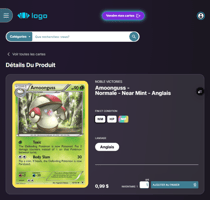
### [When standard tools can’t keep up: why Addio for Collectors changes the game for card and game retailers](https://pages.ciao.ca/en-ca/ciaociao/when-standard-tools-cant-keep-up-why-addio-for-collectors-changes-the-game-for-card-and-game-retailers?hsLang=en)
Copyright © 2026, Tous droits réservés, Ciao. [Politique de confidentialité.](https://www.ciao.ca/securite)