 By
·
3 minute read
By
·
3 minute read
Axe‑con is the world’s largest free virtual conference dedicated to digital accessibility, bringing together professionals across design, development, compliance, and organisational leadership. The 2026 edition was held on February 24–25, offering multiple content tracks and maintaining a fully accessible event format with live captions and ASL interpretation.
A major theme in this year’s program was the expanding role of artificial intelligence (AI) and automation in accessibility. Several sessions explored how AI‑driven tools and agentic systems can affect accessibility outcomes, highlighting both risks—such as scaling inaccessible patterns—and opportunities, including AI’s potential to help detect issues and monitor interfaces for bias and accessibility gaps.
Complementing the AI‑focused sessions were talks on practical, scalable accessibility work—including accessible design methods, non‑deterministic interfaces, mobile app accessibility, automated testing with axe‑core, and shift‑left practices. The program also addressed U.S. legal updates, the European Accessibility Act, and organisational frameworks for sustainable accessibility. Overall, the content underscored accessibility as a cross‑disciplinary, organisation‑wide responsibility.
Here’s a summary of some interesting talks:
European Accessibility Act (EAA) Compliance Update with Matthew Luken, Otto Sleeking and Moïse Akbaraly
Across Europe, countries are moving decisively from guidance to enforcement as accessibility obligations tighten. Norway has already issued daily fines for non‑compliance, the Netherlands is prioritizing audits after strict reporting deadlines, Sweden is scaling market surveillance with a focus on banks, Ireland is examining consumer complaints for accessibility barriers, and Poland, the Czech Republic, Hungary, and Romania are expanding self‑reporting and transparency requirements. France stands out with both a major update underway for its General framework for improving accessibility (RGAA) standard and the first private‑sector legal action targeting large grocery retailers, soon extending to banks and finance.
A key emerging pattern is that regulators and monitoring bodies are rejecting overlays as valid accessibility solutions because they fail to fix underlying issues, meaning sites relying on them cannot reliably pass audits. At the same time, the EAA is creating a landscape where accessibility is actively monitored, publicly visible, and enforceable through audits, penalties, coordinated regulators, disability‑group complaints, and reputational pressure. Collectively, this is driving organizations toward meaningful remediation rather than surface‑level fixes, signaling a new era of practical, enforceable digital accessibility across Europe.
 Created with Copilot
Accessibility Annotations Around the World with Daniel Henderson-Ede and Jan Maarten
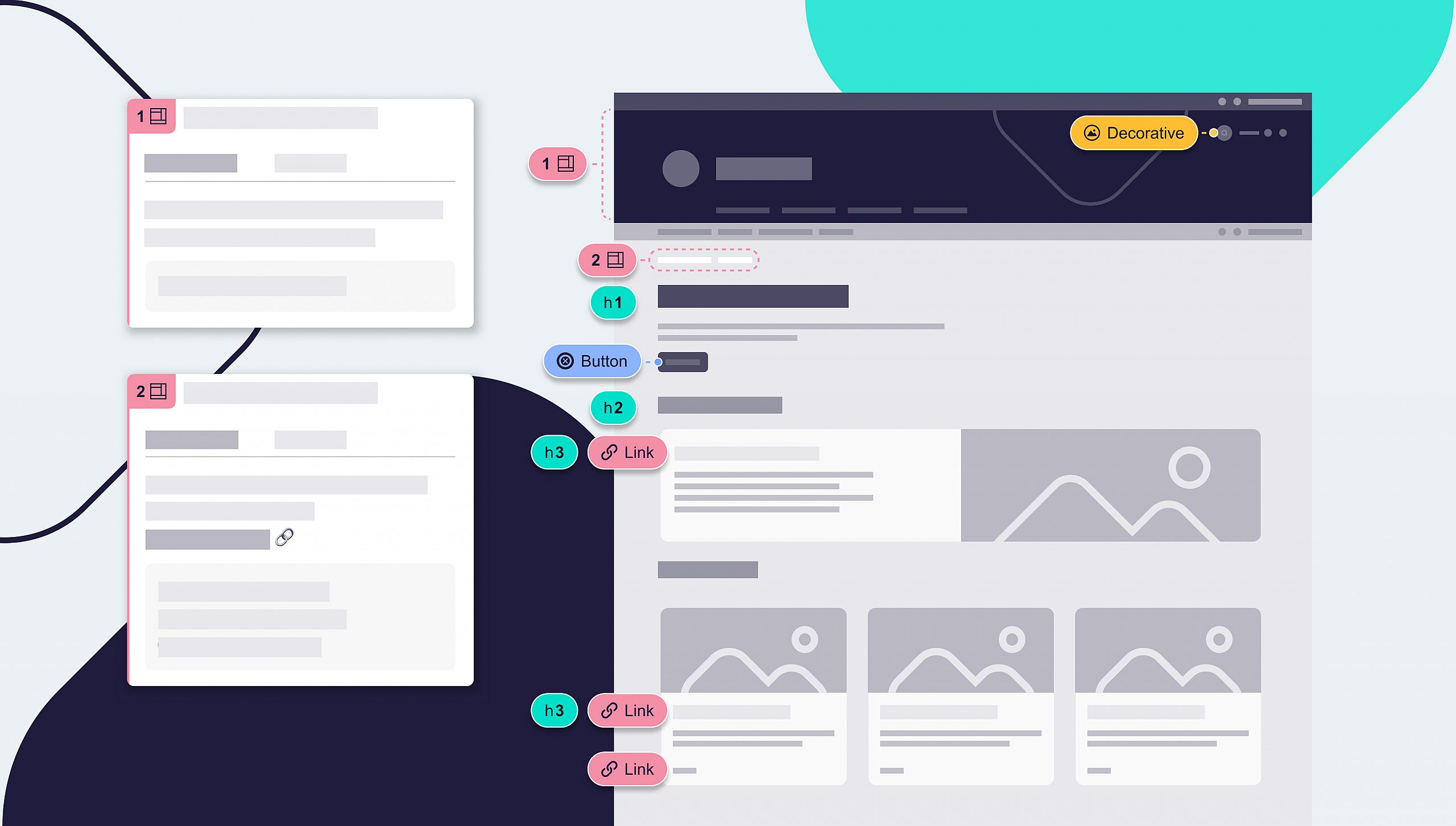
Annotations give designers a shared language to communicate semantics, interactions, hierarchy, and behaviours to developers. Without them, teams can easily misinterpret headings, control types, navigation patterns, or accessibility expectations—even when using accessible design‑system components. Annotation kits in tools like Figma or Sketch provide consistent labels and notes that streamline handoff and reduce defects, and many accessibility issues could be avoided simply by annotating early.
Teams around the world tailor annotation tools to their workflows—localising kits, combining accessibility and UX notes, or creating plugins and templates. Companies like Lyft, DocuSign, Adobe, and eBay demonstrate how annotation systems can scale into policy‑supported practices, and open‑sourcing these tools accelerates learning while reducing duplicated effort. Ultimately, the question isn’t whether to annotate, but how to choose or adapt the right approach to help designers and developers build more accessible products together. This point reinforces why annotation practices matter: they only succeed when supported by organisational culture. As Damian Sian noted, “Vision without authority is just a wish… without this top‑down support, accessibility would have remained a nice to have and not a mandate.”
Get the GitHub Annotations Toolkit at gh.io/annotation-toolkit.
 Source: The value of accessibility annotations in inclusive design
Testing web experiences with your keyboard with Greg Gibson
Keyboard testing is a simple, fast, and highly effective way to evaluate the real accessibility of a web experience—especially for users who do not use a mouse or those who rely on assistive technologies. The session explains that anyone with a keyboard and browser can do meaningful testing, and that automatic tools often miss the high‑impact issues keyboard testing uncovers. Using only keyboard keys—Tab, Shift+Tab, Enter, Space, the Arrow keys, and Escape—testers can quickly uncover issues that make content unusable without a mouse. This makes keyboard testing one of the easiest entry points for teams new to accessibility, while also serving as a strong indicator of a page’s overall structural quality.
The talk walks through common issues—such as missing skip links, invisible or obscured focus, incorrect tab order, inaccessible components, and problematic patterns like auto‑advancing carousels—and demonstrates them on a custom test page and a case study of Cloudflare’s homepage. Many problems shown would have been caught in minutes with basic keyboard testing despite sophisticated visual design and code. The core message is that manual keyboard checks should be part of every team’s process because they are quick, require no special tools, and meaningfully improve both accessibility and usability. After learning and sharing these basics, anyone can help ensure that new features ship with proper keyboard support—making the web better for everyone.
Conclusion
Axe‑con continues to be a notable event within the digital accessibility community. Its mix of introductory and advanced sessions ensures that participants at different levels—from those new to accessibility to more experienced practitioners—can find material relevant to their work. While perspectives and formats vary from year to year, the conference consistently offers a broad overview of current themes, making it a useful touchpoint for anyone looking to stay aware of ongoing discussions in the field.